
At The Jones Firm, we deliver high-impact legal solutions for visionaries, institutions, and innovators driving the future of commerce, technology, and culture. As a boutique business law practice, our reputation is built on results: securing complex transactions, navigating high-stakes regulatory shifts, and positioning our clients ahead of the curve. Today, General Counsels across industries face a seismic regulatory pivot that demands immediate, strategic foresight.
The Federal Trade Commission’s July 2026 proposed policy statement on artificial intelligence accuracy and deceptive steering has fundamentally changed how companies must govern their AI systems. When combined with the SEC’s aggressive stance on "AI-washing," the message to leadership is unmistakable: accuracy is no longer just a technical metric; it is a profound legal liability.
The FTC’s July 2026 Policy: Decoding Deceptive Steering
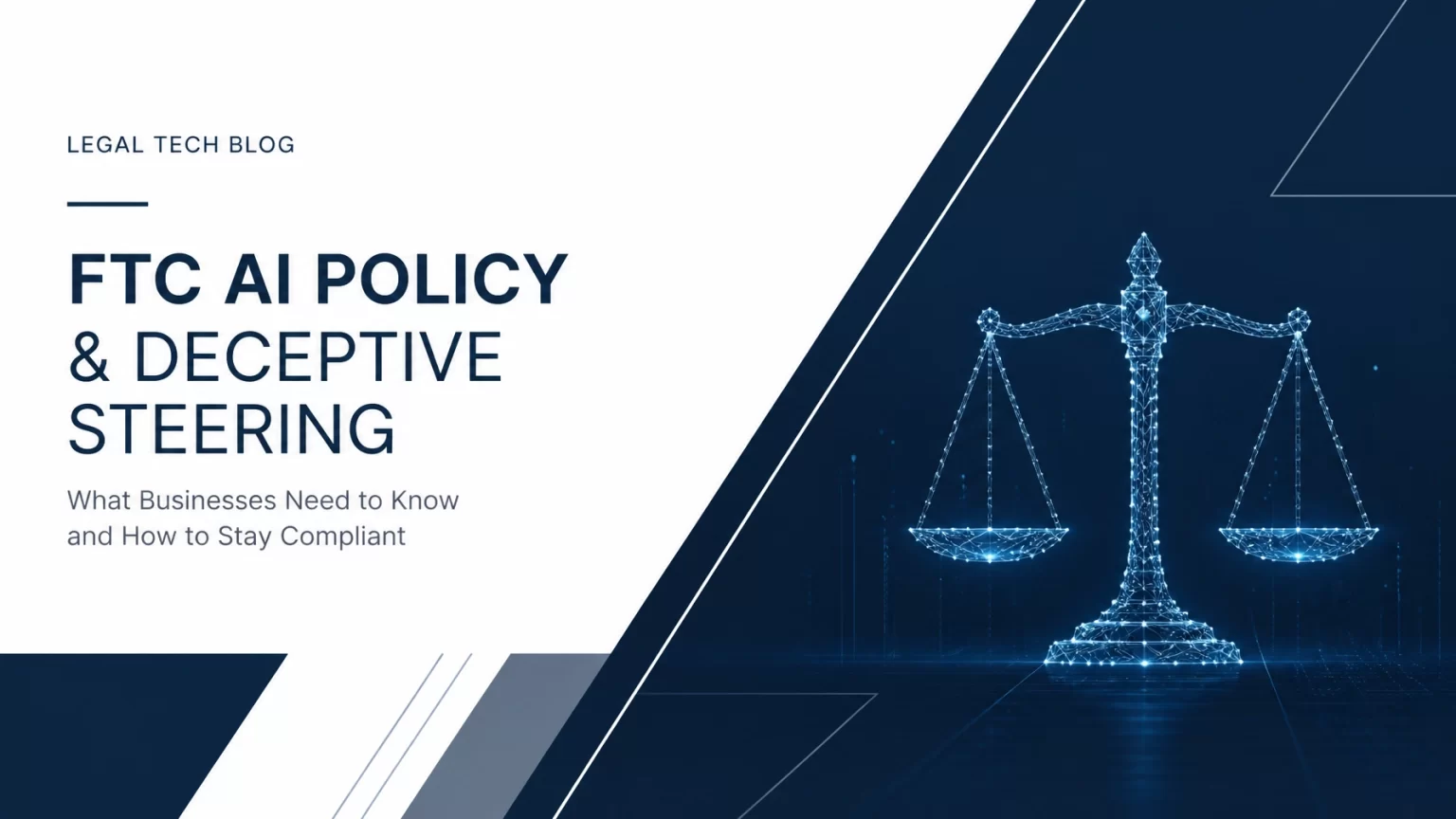
For years, companies deployed generative AI models under the assumption that occasional "hallucinations" or biased outputs were viewed by regulators merely as engineering bugs. The FTC's proposed policy statement on the Suppression of Accuracy in Artificial Intelligence Systems shatters that assumption.
Under Section 5 of the FTC Act, the Commission now takes the position that consumers and enterprise users maintain a default expectation: AI systems distill truth and human knowledge to help users achieve their objectives. When an AI company intentionally steers model outputs away from the most accurate results to serve undisclosed commercial, ideological, or compliance-driven objectives, the FTC considers that practice deceptive steering.
[Default Expectation: Truth & Accuracy] ──> [Undisclosed Model Tuning/Steering] ──> [FTC Section 5 Deception Violation]
Crucially, motive is legally irrelevant. Whether a system is tweaked to promote a preferred product, protect brand revenue, or dodge state-level compliance mandates, failing to clearly and conspicuously disclose that tradeoff to the user crosses the line into unlawful deception.
The Collision Between Federal Standards and State AI Mandates
Navigating this new regulatory terrain is especially treacherous for multi-state operations and tech innovators. Consider the burgeoning compliance pressures introduced by state-level frameworks like the Colorado Artificial Intelligence Act.
To mitigate algorithmic bias and satisfy state-level disparate-impact rules, companies have often quietly adjusted model weights or introduced automated output filtering. However, the FTC has issued a stark warning: suppressing accuracy to avoid state liability can itself violate federal consumer protection laws if those adjustments are hidden from the end user.

This creates a high-stakes compliance paradox for corporate leadership. As a premier private equity law firm advising fast-growing tech funds and portfolio companies, The Jones Firm works side-by-side with executive teams to harmonize conflicting federal enforcement priorities and state-level mandates without exposing the enterprise to enforcement actions.
Beyond the FTC: The SEC and the Crackdown on "AI-washing"
While the FTC polices consumer deception and model steering, the Securities and Exchange Commission is zeroing in on capital markets through its rigorous anti-fraud framework targeting "AI-washing."
Analagous to greenwashing, AI-washing occurs when public issuers, investment funds, and private enterprises exaggerate, misrepresent, or fabricate their use of artificial intelligence to capture investor enthusiasm or inflate valuations. Recent SEC guidance and enforcement trends underscore several critical compliance guardrails:
- Substantiate Your Claims: Marketing a proprietary platform as "AI-driven" or "predictively superior" requires robust empirical documentation. If the underlying technology relies on basic scripts or third-party APIs with minimal proprietary value, the disclosure is materially misleading.
- Audit Investor Communications: Form ADV disclosures, pitch decks, and investor updates must accurately reflect the true extent and operational maturity of AI integration.
- Align Operations with Marketing: Fund managers and portfolio companies must ensure that internal operational realities match external branding verbatim.
Cross-Industry Ripples: From Entertainment Media to NIL Compliance
AI accuracy and steering affect far more than traditional enterprise software. The shockwaves are reshaping the entertainment, sports, and digital asset sectors in unprecedented ways:
- Entertainment and Media: Studios, creators, and media companies leveraging generative tools must ensure that automated curation or content filtering does not deceptively alter factual or creative integrity. Whether you are consulting with an entertainment lawyer NYC creators trust or safeguarding international IP portfolios, transparency is your best shield against liability.
- Sports and NIL: The intersection of sports technology, athlete analytics, and brand endorsements brings unique regulatory scrutiny. Even as a specialized NIL lawyer navigates complex deal structures and collective bargaining agreements, compliance officers must scrutinize AI-generated valuation tools and performance metrics to prevent misleading representations.
- Crypto and Digital Assets: Automated trading algorithms, smart contract validators, and decentralized AI networks face dual scrutiny under SEC disclosure rules and FTC consumer protection standards.
Actionable Strategy: Building a Robust Compliance Architecture
General Counsels cannot afford a wait-and-see approach. As your trusted partner, The Jones Firm recommends immediate, proactive steps to bulletproof your AI governance framework:
- Conduct a Comprehensive AI Audit: Catalog every generative and predictive model deployed across your products, marketing channels, and internal operations. Identify what objectives each model truly optimizes for.
- Establish Clear Disclosure Architecture: If your systems incorporate output steering, commercial filtering, or compliance adjustments, implement prominent, layered disclosures. Remember: the FTC has made it clear that buried terms of service offer zero legal safe harbor.
- Align Legal and Engineering Teams: Ensure that data scientists, product developers, and legal counsel operate in lockstep. Engineering choices must reflect legal risk thresholds.
- Document Model Limitations: Maintain rigorous audit trails regarding training data, accuracy benchmarks, and known performance limitations to satisfy both SEC disclosure standards and FTC truthfulness expectations.

Partner with Legal Architects Who Understand Innovation
Navigating the intersection of artificial intelligence, federal consumer protection, and securities enforcement requires more than standard legal advice: it demands strategic foresight, transactional fluency, and deep industry knowledge.
Whether you are scaling a venture-backed startup, structuring a cross-border private equity transaction, or protecting valuable intellectual property, The Jones Firm delivers the sophisticated, boutique-level service required to protect your enterprise.

Ready to safeguard your AI initiatives and ensure total regulatory alignment?
Contact The Jones Firm today to schedule a confidential consultation with our high-impact legal team. Together, let's build a secure, future-proof foundation for your business.
Relevant Tags & Keywords
#AILaw #SportsLaw #NIL #VC #DigitalAssets #Crypto #FTC #SEC #Compliance #GeneralCounsel #TechLaw #CorporateLaw